landscaping that adds value
landscaping maintenance
Landscaping standards help preserve the beauty and value of our community and are an important part of keeping Swift Creek Estates looking its best. Well-maintained properties—including regular landscaping and weed control—create an attractive environment for everyone while supporting property values, resident enjoyment, and lower long-term HOA maintenance costs.
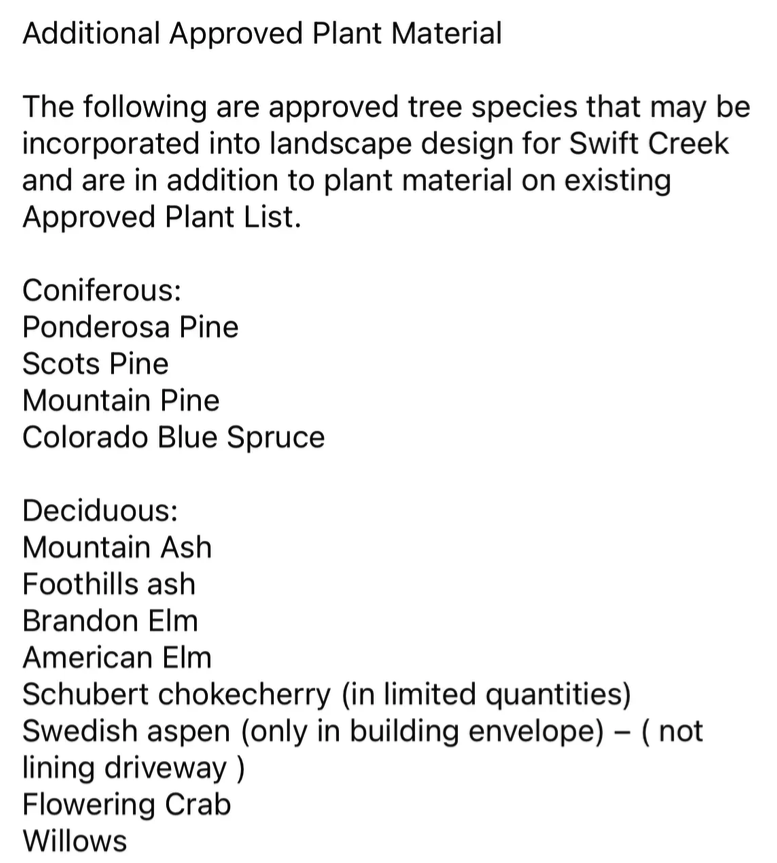
To support homeowners, the Design Guidelines, planting resources, and a list of County-approved businesses are available through the links below. These resources are intended to help residents maintain tidy, well-managed yards that align with community standards.
Weed Inspections Across the County
Weed inspectors will be throughout the County this summer inspecting private, public, and municipal property to help stop the spread of regulated weeds listed as noxious and prohibited noxious under Alberta’s Weed Control Act. These weeds can pose serious economic, ecological, and environmental threats to the land by displacing native plants, reducing biodiversity, degrading soil and water quality, and interfering with agricultural production.
Prohibited noxious weeds, such as nodding thistle and bighead knapweed, must be destroyed in their entirety to prevent establishment. Noxious weeds, such as Canada thistle, black henbane, and perennial sow-thistle, must be controlled to limit their spread. Controlling these species helps protect native ecosystems, maintain the health of rangelands and croplands, and reduce the long-term costs of invasive species management.
It is the landowner’s responsibility to manage and control the spread of noxious and prohibited species.
Crop Inspections and Pest Control
While the weed inspectors work with the Weed Control Act, the crop inspector works under the Pest Control Act. The Pest Control Act manages the animals, birds, insects and disease that threaten the crops and livelihoods of our producers. Throughout the season, the crop inspector carries out surveys for a variety of concerns including clubroot and Dutch elm disease.